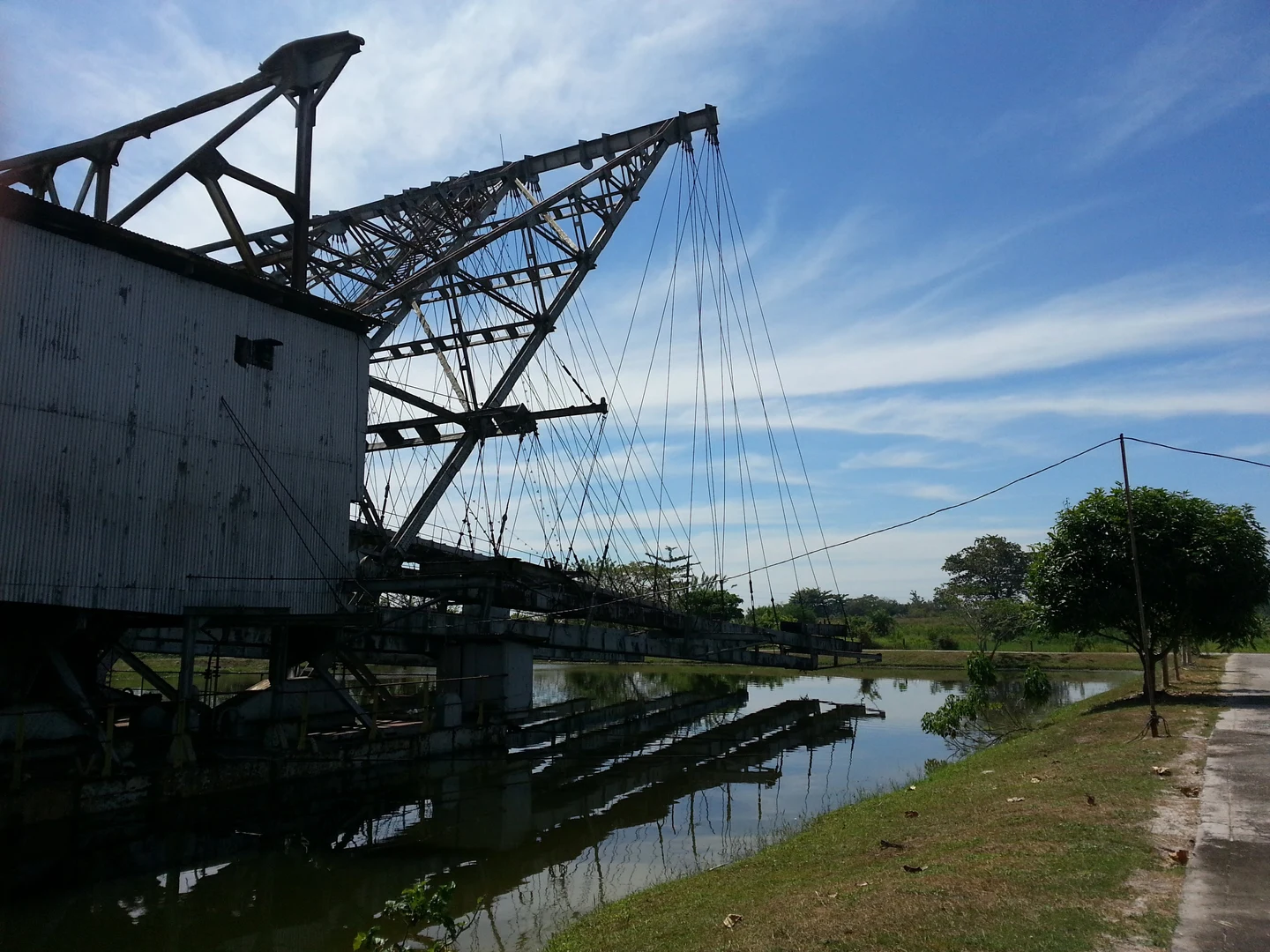
TT5, LokHK99, 4 February 2014, Wikimedia Commons, CC BY-SA 4.0. Historical photograph, resized/WebP and responsive crop; derivative under the same licence. Not current-condition or access evidence.
Ask about an Ipoh and Batu Gajah journeyOfficial references and photo licence
A factory where you might expect a boat
From a distance, TT5 is a puzzle of metal, cables and water. It does not look like a row of museum cabinets, and it is not the kind of boat you would choose for a leisurely cruise. That visual puzzle is a good reason to make a separate Batu Gajah outing during an Ipoh stay. Start with one question: what work was this huge structure built to do? Looking for an answer gives the steel shapes a purpose and makes the visit more than another industrial-looking photograph.
The short version: lift, separate, discharge
A 2023 Museum Volunteers account, transcribed from a TT5 guided visit, explains the basic process. A chain of buckets lifted tin-bearing material; screens, water and jigs helped separate the useful ore; unwanted material left through rear chutes. The structure floated on pontoons. Think of these as connected stages rather than separate exhibits. When interpretation identifies a component, ask which stage it served. This summary describes historical machinery, not a promise that the dredge now runs a working demonstration.
Follow the lines before counting the parts
The photograph in this article was taken in February 2014. It shows TT5's framework and cables above the water, with part of the structure reflected below. Let your eye follow a diagonal beam or a hanging line, then compare that detail with the overall silhouette. It is an accessible way to approach an unfamiliar machine without guessing what every part does. Use a current guide or sign for the explanation. The image is a historical view, not evidence of today's paintwork, visitor path or permitted deck access.
A long working life, then a different job
The current operator records that TT5 was built in England in 1938, upgraded in 1963 and ceased operation in August 1982. Its story did not end with production: it was donated to the Perak State Government in 1997. That change from useful machine to preserved heritage is worth pausing over. What would disappear from the story if only photographs and written descriptions survived? Standing near a large object helps convey scale in a way a small image cannot, without requiring you to know engineering terminology.
Not the same tin story as an Old Town club
Han Chin Pet Soo introduces the social world associated with Ipoh's mining community. TT5 puts the machinery and industrial landscape at the centre. If you have already explored that Old Town story, this is a useful contrast rather than a repeat: people and social life in one place, a large working system in the other. You need not visit both on the same day. Choose the one that matches your curiosity and leave time afterwards to talk about what changed your picture of the region.
Plan around today's operator, not an old ticket photo
TT5 gives its address as 9th km, Jalan Tanjung Tualang, Batu Gajah. Its current website states that tickets are sold online, not over the counter. Check the operator's booking page before setting out, including what the selected experience covers and any access requirements. An old blog's walk-in instruction or ticket price should not override that current notice. Ask about stairs, walking surfaces and the actual route for children or anyone with mobility needs. A historic industrial setting is not a promise of unrestricted climbing or access.
Leave room for the discovery, then arrange the drive
This is a museum outing, not a passenger boat ride, and a visit does not imply operating machinery. For a relaxed plan, give TT5 its own portion of the day and choose a meal separately rather than attach several time-critical stops. On a Singapore-to-Ipoh journey, say whether Batu Gajah is a requested stop or a separate local trip: neither is automatically part of a hotel transfer. Send the date, exact pickup and destination, passengers, luggage, child or mobility needs, return plan and requested waiting. Confirm vehicle suitability and final fare; border and road conditions vary. This guide was researched on 9 October 2026 and is not a personal visit claim.
Ready to ask about an Ipoh transfer?
Send pickup location, Ipoh destination, date, passengers, luggage, elderly or child needs and return arrangement by WhatsApp.
WhatsApp for Ipoh Quote