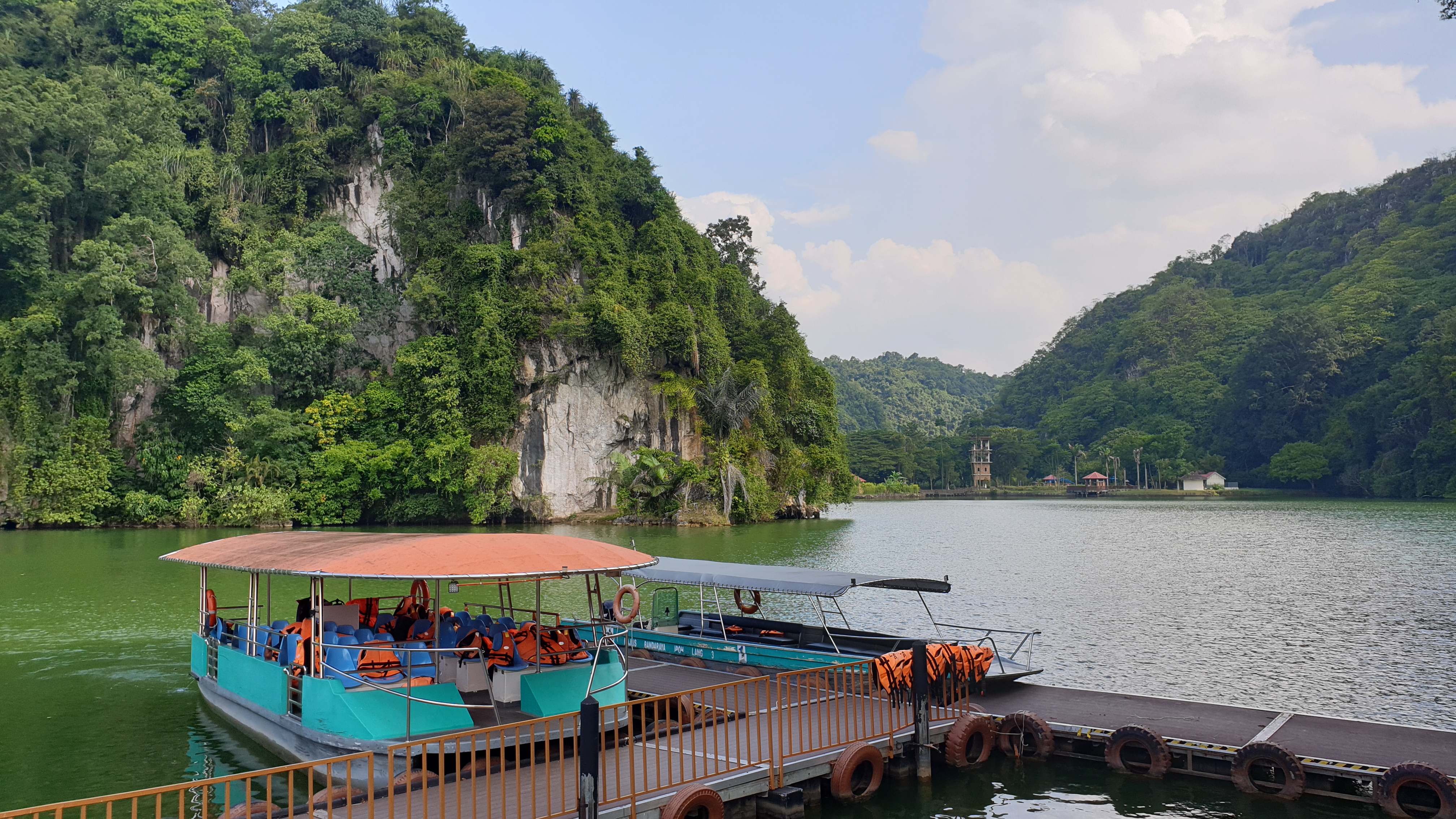
Gunung Lang, 17 July 2019. Photo by Michael / Bacon Noodles, CC0 public domain. Original image with responsive display crop. Historical scenery and boats, not today's service availability or our fleet.
Plan an Ipoh day with a lake stopOfficial references and photo licence
An outdoor chapter for an Ipoh food trip
If your Ipoh map is full of places to eat but has little space between them, Gunung Lang is a different sort of addition: a lake-and-limestone landscape rather than another table. Tourism Perak describes a recreational park shaped by an earlier tin-mining use, with water occupying a substantial part of the site. That combination gives the scenery a story as well as a view.
This is an independently researched discovery guide, not a claim that we visited today. The five suggestions below are ways to look more closely, not five separately ticketed attractions or a promise that every facility is open. Choose this stop because you want outdoor scenery; do not add it just to make the itinerary longer.
1. Let the limestone change the scale of the picture
Start with the shape of the hills. In the credited photograph, the cliff on the left rises abruptly from the water, while the more distant slopes form a lower frame around the lake. A small pavilion or boat helps the eye register how large the rock face is.
Try a wide view before zooming in. Then look for a detail you missed: a pale patch of stone against greenery, a change in the cliff's outline, or the gap between two slopes. These are observation ideas from the documented landscape, not a mapped walking route. Stay in permitted visitor areas rather than searching for an unmarked viewpoint.
2. Watch the water instead of chasing a perfect reflection
A lake photograph can make stillness look like a permanent feature. In reality, wind, weather and boat movement change the surface. Enjoy the differences: a broken reflection, ripples crossing one another, or light moving over the water can be more interesting than recreating somebody else's image.
For a small family challenge, ask each person to choose one colour and one shape they notice. It turns a quick photo stop into a shared activity without needing equipment or a long walk. Keep children beside you at the water's edge and follow barriers and on-site directions; this is not a swimming suggestion.
3. Read the view as a changed working landscape
The former-mining background matters. It stops the park becoming just a generic 'hidden natural paradise' caption. Consider how a place associated with extracting resources can later become somewhere people come for recreation. The tourism authority's account supports that broad change; it does not establish a date or detailed mining story for every feature you can see.
If you enjoy the machinery side of that history, the TT5 tin-dredge guide is a separate outing to investigate. Gunung Lang's article is about looking at a present-day leisure landscape with that earlier use in mind, not a substitute for a museum, guided industrial visit or geology lesson.
4. Look down as well as up
Tourism Perak names heliconias and bougainvillea among the park's planting. When plants are visible along the route you are allowed to use, compare leaf shapes and textures with the rock backdrop. You do not need a full flower display for a satisfying photograph.
A phone close-up of a leaf and a wide landscape frame can tell two very different stories about the same stop. Leave plants where they are and avoid guessing the identity of anything unfamiliar. Flowering, maintenance and accessible areas can change, so the article does not promise a particular seasonal scene.
5. Treat the boat as a separate decision
The historical cover photograph shows boats at the jetty. That is useful context, not proof that a boat is operating when you arrive. Check the current boat service, boarding arrangements, return service and any charges with the park before building the visit around a crossing. A previous council notice concerned a specific June 2026 event; it is not evidence of a closure today.
Will a lakeside look be enough for your group, or is a boat journey the main reason to go? Answer that before setting the rest of the day. With a stroller, walking aid or wheelchair, ask about the actual surfaces and boarding process. Do not infer easy access from the word 'park'.
Where it fits—and what to confirm
Our suggested rhythm is simple: keep the outdoor visit flexible, then leave room for an Ipoh meal or an indoor stop. Heat or rain may change how long you want to stay. Bring water, comfortable shoes and sun or rain protection appropriate to the forecast; there is no need to force a fixed visit length from an old itinerary.
Is it the same experience as Kek Lok Tong? No: that article centres on a temple cave opening into a garden; this one is a lake-first recreational landscape. Is entry or boating included in a car booking? No such inclusion is promised. Confirm current park terms separately.
For Singapore–Ipoh transport, send your travel date, exact pickup and hotel, requested Gunung Lang stop, passengers and bags, child or mobility needs, and waiting or return plan. Vehicle fit, stops and final fare need confirmation. Border and road conditions affect arrival, so avoid tying a long-distance transfer to an unconfirmed last boat.
Ready to ask about an Ipoh transfer?
Send pickup location, Ipoh destination, date, passengers, luggage, elderly or child needs and return arrangement by WhatsApp.
WhatsApp for Ipoh Quote